WhatIsTheUpperRoomCulture.
The UpperRoom Culture is a gospel revival movement built at the intersection of worship, culture, and the presence of God. We are not a church. We are not an event company. We are not a music brand. We are a living movement, a community, a new culture being formed around one conviction:
The fire falls when the conditions are right. Our job is to build the room and create the conditions.
Every gathering we host, every programme we run, every relationship we build, is shaped by that one conviction. We are not here to put on a show — we are here to create real environments where people can genuinely encounter God in a way that changes them from the inside out.
We call ourselves a culture deliberately. Not a ministry. Not a movement in the traditional religious sense. A culture — because what we are building is not a programme people attend. It is a way of living, gathering, seeking, and going out that becomes part of who you are. A new culture, not of the world but deeply aware of it, rooted in the Word and shaped by the Spirit.
The Fire Fell Here. Those four words are our declaration, our history, and our promise all at once.
RootedinActsChapter Two.
The name and the foundation of The UpperRoom Culture come from Acts chapter 2. This is not incidental. It is the entire architecture of who we are.
In Acts 2, a group of ordinary people gathered in an upper room in Jerusalem. Different backgrounds. Different stories. Different failures. Different dreams. They were not a polished institution — they were a community of people who had encountered Jesus and were now waiting, together, for what He had promised.
They gathered. They sought. They prayed. They worshipped. And the fire fell.
When the fire fell, it did not stay in the room. It went into the streets. Peter stood up and preached, and three thousand people gave their lives to Christ in a single day. Healing began happening. Lives were transformed. A community was formed that turned the known world upside down.
That upper room was not remarkable because of the people in it. It was remarkable because of what happened when they gathered with the right conditions. United. Seeking. Together.
The UpperRoom Culture exists to recreate those conditions everywhere we go. Every city. Every gathering. Every programme. Every conversation.
OneFoundation.TwoWings.
A theological framework drawn directly from Acts 2 and the structure of the cross. Every programme, every gathering, every initiative is an expression of it.
Worship
Worship is the ground everything else stands on. Not music as performance, not atmosphere as a product, but worship as the posture of an entire community that orients itself toward God first in everything it builds. A community that worships knows who it belongs to, why it exists, and where its strength comes from. Worship is not the warm-up. It is the foundation.
Evangelism
The Gospel goes to the street. The UpperRoom does not wait for the world to come to us. We go to where people are, in their language, in their context, in their culture, without losing a single word of the message's power. Street interviews. The altar call at the Worship Night. Gospel on the Run. Evangelism is a lifestyle built into the DNA of the community.
Prayer
Intercession is not an afterthought. It is the infrastructure. Power Circle, our weekly one-hour intercession gathering every Thursday on Zoom, is the heartbeat that keeps the fire burning between every other touchpoint. Prayer is the work that makes the public moments possible. Without it, what we do is entertainment. With it, it is encounter.
These three are not equal departments operating independently of each other. They are a body. The foundation holds everything up. The wings reach in two directions. And they only produce what they are designed to produce when they are working together.
TheFireFallsWhenAllThreeAreintheSame Room.
Most movements choose one of the three pillars and build their identity around it. Worship movements focus on music and atmosphere. Evangelism movements focus on outreach. Prayer movements focus on intercession. Each one is powerful and each one is necessary.
But the upper room in Acts 2 was not a worship service. It was not a prayer meeting. It was not a street outreach. It was all three happening at the same time in the same room. And that convergence is what created the conditions for the fire to fall.
The UpperRoom is not trying to choose the best one. It is recreating the convergence. And when the convergence happens, the fire falls. Every time.
The Cross HasThree Points.EachOneIsaPromise.
Not values written on a wall — the real, spiritually verifiable results that God produces when worship, evangelism, and prayer converge together.
Transformation
The renewal of the whole person at the root level. Not behaviour modification. Not a temporary emotional experience. A fundamental shift in who someone understands themselves to be, brought about by a genuine encounter with Christ. The mind is renewed (Romans 12:2). The identity is clarified. The patterns and beliefs that held someone captive begin to break.
Power
The active presence of the Holy Spirit working in and through people. Not power as atmosphere or as a feeling produced by music. Power as the dunamis of God — the God-given ability to do what you could not do before, to go where you could not go before, to become who you were created to be. People do not leave the UpperRoom the same way they came in.
Healing
Restoration from brokenness and past wounds. The UpperRoom does not create an environment where pain is managed or hidden — it creates an environment where pain can be brought honestly before God and met with His love. Physical healing. Emotional healing. Relational healing. Healing from trauma, shame, addiction, and loss.
WeAreStrongerTogether.
Community is not a feature of the UpperRoom. It is the point. Acts 2 did not happen because one extraordinary individual had an encounter with God alone in a room. It happened because a community gathered together in one place, in one accord, pursuing God with everything they had.
We are not trying to build an audience. We are trying to build a community. People who know each other. People who pray for each other. People who hold each other accountable. People who go out into the world together and bring the Gospel to the streets and to the culture.
We are actively building relationships with Christian movements, churches, Christian clothing brands, and Kingdom creatives across Europe and beyond. Not as transactions — as genuine community.
Collaboration is not a strategy for us. It is a theological posture. We are not here to own space in the gospel creative world — we are here to be a bridge that unites it. When we partner with another movement, another church, another creative community, we come to stand alongside, to amplify, and to create something that neither of us could have created on our own.
BuiltbySomeoneWhoNeededIt.
Prince David Nsenda Lukau — known artistically as The Upper Room Culture — is a Congolese-born, South Africa–raised gospel rapper, singer-songwriter and revivalist now based in Europe. Born 16 February 1997, he carries a proud Congolese heritage, the lyrical grit of the South African streets, and the spiritual fire of a pastor's kid who never stopped chasing the presence of God.
The press calls him "The Rose of the Industry" — a name that captures the contrast in his sound: street-honest, poetically tender, smooth and luxurious in delivery. His music sits at the intersection of Congolese melody, South African rhythm, American hip hop, and the gospel inheritance of artists like Kirk Franklin.
He is the founder of AltarCall Music and the visionary behind TheUpperRoom Culture — a movement that began in Portugal during COVID lockdown, when he was alone in a country whose language he didn't speak, with no network and a career to rebuild from zero. Isolation gave him the question every builder eventually faces: what am I actually here for?
The answer was not an album. It was not a concert tour. It was a room. He had spent his whole life watching young people who loved God feel like they had to hide it from the culture they lived in — and watching people fully in the culture feel like the church had nothing real, nothing honest, nothing that spoke their language to offer them. Two worlds. No room in the middle. So he built the room.
The first Worship Night filled a venue in Europe. Lives changed. People gave their lives to Christ. The fire fell. Now it is moving — Johannesburg next, then everywhere the room is willing. We are hitting global.
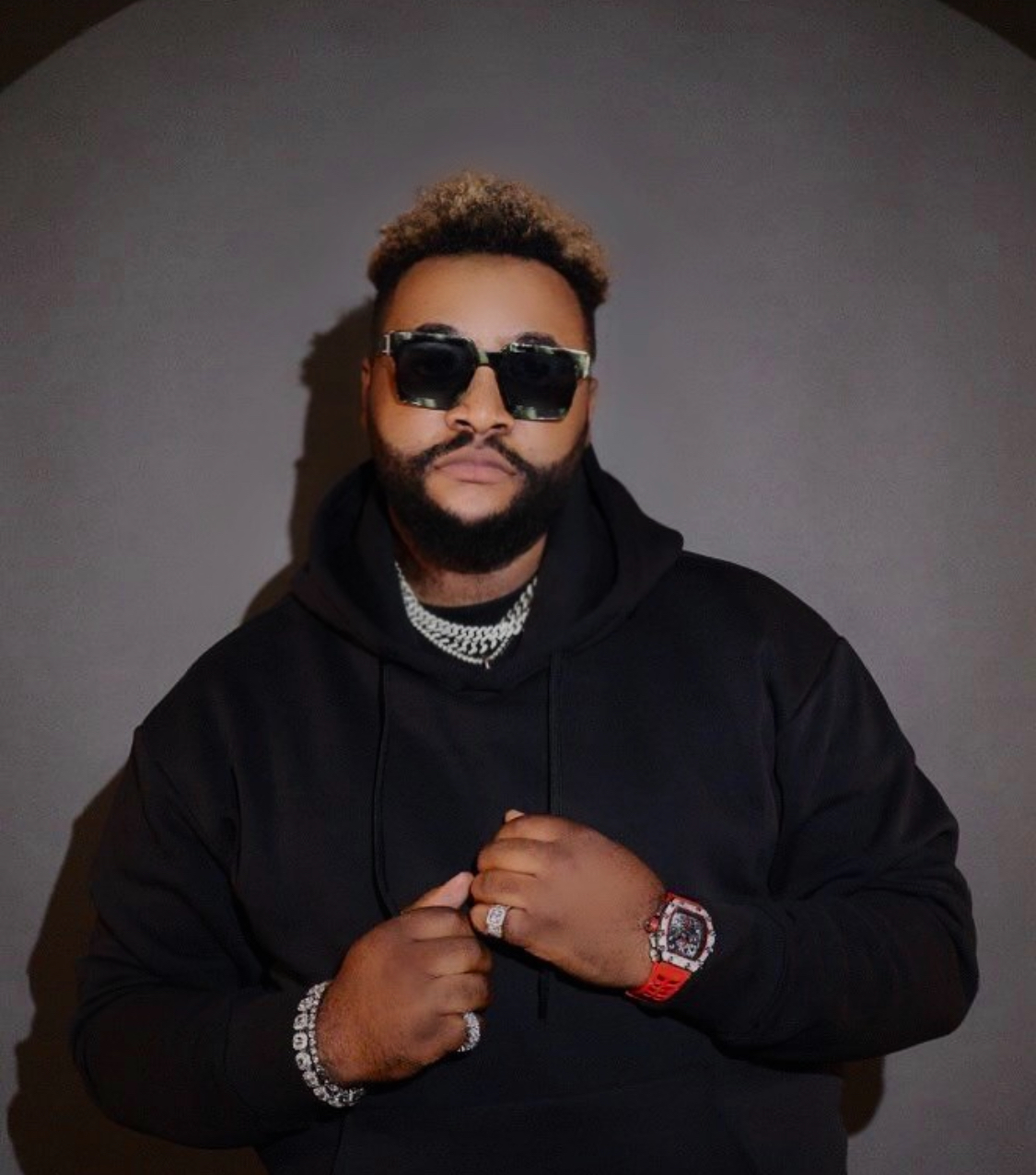
HeartheSound.
TheFullStory.
Born Prince David Nsenda Lukau on 16 February 1997, The Upper Room Culture spent his early years inside the cultural mix of South Africa — a Congolese household, an African church, and the streets of a country that never really let him forget he was a foreigner. From a young age he carried two things at once: an awareness of God's presence, and an artistic intuition that made the rap and worship languages feel like the same mother tongue.
Music came early. Influences came from everywhere — the melodic and rhythmic heritage of Congo, the energetic lyricism of South African hip hop, the technical force of American rap legends, and the spiritual blueprint of his greatest inspiration, Kirk Franklin. Out of that mix came a sound critics would later call "gritty-yet-graceful" — street-honest, poetically tender, smooth in delivery, unapologetic in its faith.
The press now refers to him as "The Rose of the Industry" — a title meant to capture the contrast he carries: resilience and elegance in the same breath. His catalogue spans the Crimson and Delarosa projects, singles like Calling Heaven, Proverbs 18, Sold to Jireh and Time (feat. Blake Zambia), all released through his own label, AltarCall Music.
Today The Upper Room Culture sits at the intersection of three things rarely held together well: a rising recording artist with international reach, a label founder backing a new generation of gospel rap, and a movement leader whose rooms feel less like concerts and more like upper rooms. The mission is one sentence long: put the fire back in the room, and send the room into the world.
WhatWe AreBuilding.
Hope Central Network — a network of revival rooms in every city we land in, run by local builders.
Zeal App — a Christian Bible study and word breakdown companion powered by Faith AI, our in-house model trained on theology across traditions, Christian psychology and Christian therapy. Your companion in the Word.
UpperRoom Podcast — conversations on faith, culture, and the cost of revival. Coming soon.
Global Expansion — Portugal done. Johannesburg next. After that, everywhere the room is willing. We are hitting global.